

Journal
What Counts as a Superyacht
Six thousand boats, one loose definition and some serious bills — what the word actually means, and what it costs to wear it.
First published December 2016 · updated March 2021 · revised July 2026
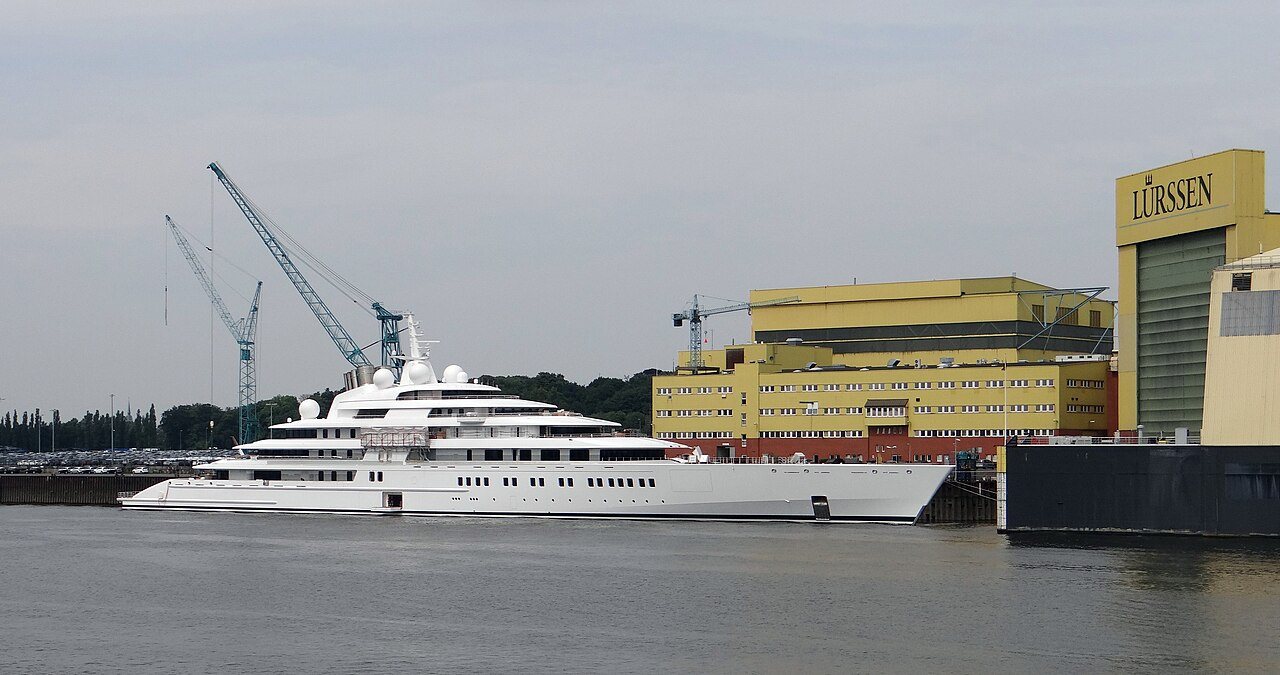
Ask three brokers what a superyacht is and you will get three answers, each calibrated to whatever they happen to be selling. There is no official definition and never has been. The regulators draw a line at 24 metres, where the heavyweight commercial codes kick in; the industry's statisticians prefer 30 metres; the word itself belongs to whoever prints it. What everyone agrees on is the substance: a crewed private vessel large enough that you never touch a fender yourself.
A small world, precisely counted
For all the noise, the fleet is tiny. As of mid-2025 there were about 6,170 yachts over 30 metres in service worldwide — roughly 5,260 motor yachts and 915 under sail. Nearly two-thirds of them sit in the modest 30-to-40-metre bracket. The over-80-metre giants that dominate the photography make up around 3 per cent of the fleet: fewer than 200 vessels on the entire planet. When one of them drops anchor off your bay, you are looking at something genuinely rarer than most museum pieces.
The top of the pile
The benchmark remains Azzam: 180 metres of Lürssen steel, four years in the shed at Bremen, delivered in 2013 for the late president of the United Arab Emirates at a reported cost north of $500 million. She sleeps 36 guests, carries a crew of around 80, and — the detail engineers still argue about over dinner — does 33 knots, a speed that has no business belonging to a hull two football pitches long. A dozen owners have since built longer tenders than most people's yachts trying to chase that combination. None has caught it.
What is actually aboard
The old clichés — a pool, a cinema, a gym — undersell the current state of the arms race. The upper end of the fleet now carries glass-sided pools that convert to dance floors, dive centres with their own compressors, twin helipads, hospital-grade medical suites, and in a handful of cases a personal submarine in the tender garage. One persistent legal quirk keeps it all in proportion: however vast the vessel, most are certified to sleep just twelve guests overnight. The 80 crew on the biggest boats exist to look after a dinner party's worth of people. That ratio, more than any waterfall, is the real definition of the breed.
The bill for keeping one
Ownership is where the romance meets the accountants. The rule of thumb has not moved in decades: running a superyacht costs 10 to 15 per cent of her value every year, before you have bought her and before any major refit. Crew salaries are invariably the largest line, typically 30 to 40 per cent of the annual budget, followed by maintenance, fuel, insurance and berthing. On a $50 million yacht, that is $5 million or more a year for the privilege of the flag on the stern — and the yard bill for a proper five-yearly survey lands on top.
Owners handle this in different ways. Some shrug and pay. Some put the boat on the charter market for a few weeks a season, which softens the arithmetic and keeps a crew sharp, though it never turns a yacht into an investment and nobody serious pretends otherwise.
Try before you sign anything
Which points to the sensible sequence for anyone circling ownership: charter first. A month spread across two different hulls will teach you more about what you actually want — displacement or planing, five cabins or eight, a chef who does sushi or one who does Sunday roast — than a year of boat shows. The fleet is small, the money is large, and the difference between the right boat and the almost-right boat is measured in millions a year. It is the one purchase where the test drive lasts a week and comes with its own crew.